Rajaji National Park
Home > Rajaji National Park

Home > Rajaji National Park
In 1983, the Government issued a notification for the creation of Rajaji National Park by merging three wildlife sanctuaries of Uttarakhand – Rajaji, Motichur, and Chilla. The park was named in honour of the renowned freedom fighter C. Rajagopalachari, popularly known as “Rajaji”. Covering an area of 820.42 sq. km, the park was later expanded in 2015 when 255.63 sq. km of adjoining reserve forest was added as a buffer zone. This brought the total area to 1,075 sq. km, which was then declared the Rajaji Tiger Reserve under the provisions of the Wildlife Protection Act, 1972.
The tiger reserve serves as a vital green lung for three major cities of Uttarakhand – the capital city Dehradun, the sacred city Haridwar, and the yoga capital Rishikesh – providing them with fresh, clean air and a thriving natural ecosystem.
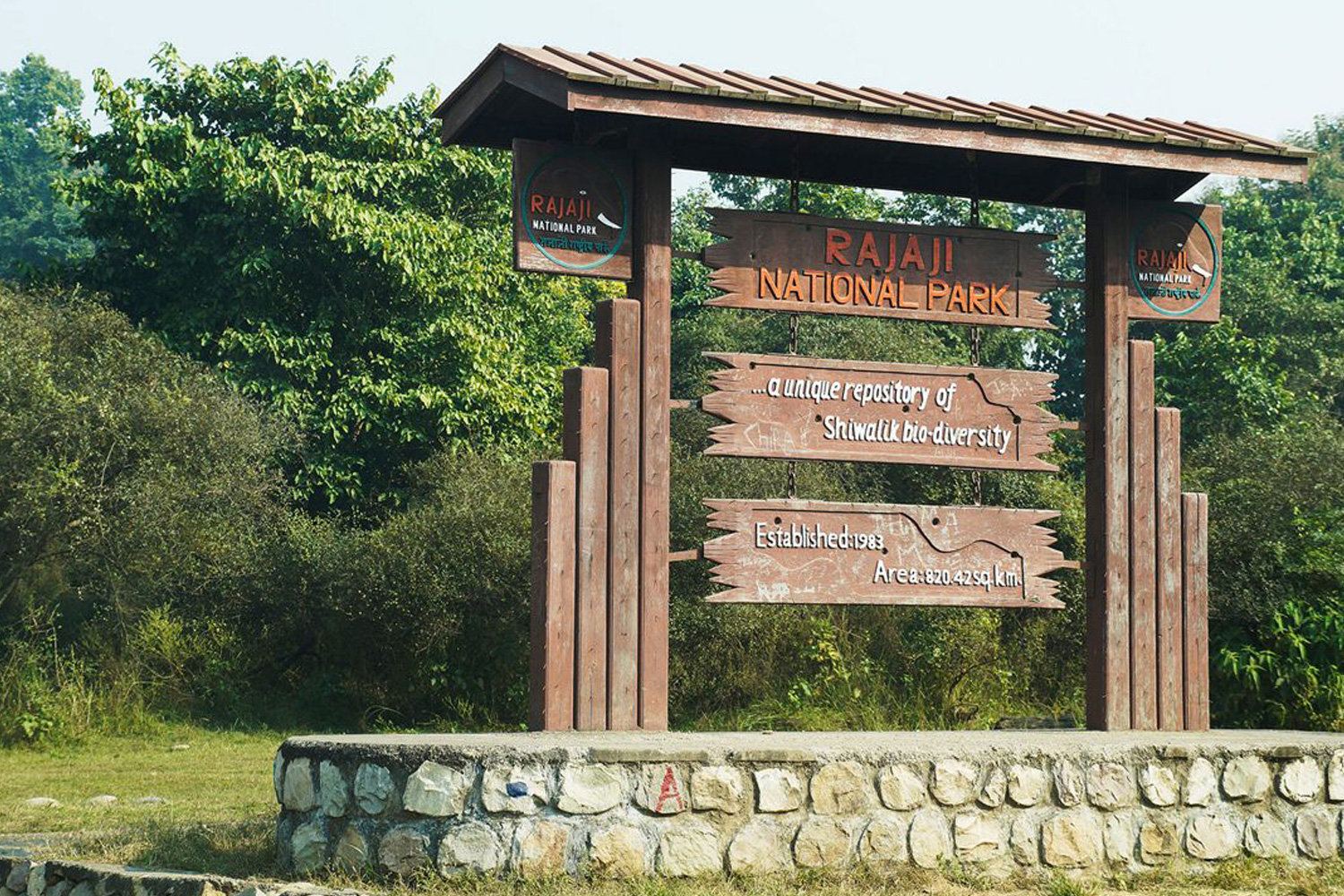
With its breathtaking landscapes and rich biodiversity, Rajaji Tiger Reserve is a paradise for nature lovers and wildlife enthusiasts. Nestled along the hills and foothills of the Shiwalik ranges, the reserve represents the unique Shiwalik ecosystem. Its terrain hosts a variety of forest types – from semi-evergreen to deciduous, and from mixed broad-leaved forests to Terai grasslands – and is classified under the Indus-Ganges Monsoon Forest type. Towering strands of Sal trees (Shorea robusta) dominate much of the landscape, creating a majestic canopy. Located in a transition zone between the temperate Western Himalaya and the Central Himalaya, the reserve enjoys exceptional species diversity, offering remarkable wildlife viewing opportunities.
Rajaji Tiger Reserve is home to a healthy population of tigers and Asian elephants, along with a diverse range of wildlife such as leopards, jungle cats, Himalayan black bears, sloth bears, striped hyenas, gorals, sambars, wild pigs, spotted deer, barking deer, and many more. It is also a sanctuary for an impressive variety of birdlife, including vultures, woodpeckers, hornbills, and migratory species like the ruddy shelduck, great cormorant, red-crested pochard, and mallard duck. The rivers and streams that traverse the reserve provide aquatic habitats where around 42 species of fish breed. In addition, the reserve shelters notable reptile species such as the king cobra, Burmese python, and common krait.
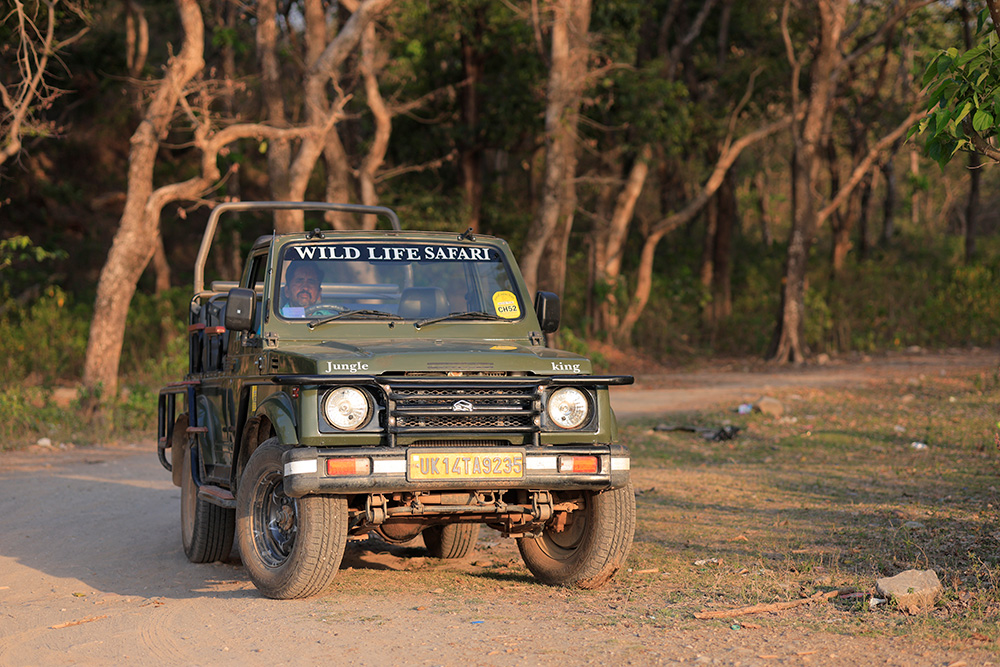

Tourists can explore Rajaji Tiger Reserve through thrilling jeep safaris, available across five zones/ranges. All entry gates are well connected by road, and safaris can be booked directly at the respective gate.
The reserve is easily accessible by road from major cities such as Delhi, Meerut, Roorkee, Haridwar, Rishikesh, Mussoorie, Dehradun, Nainital, Bijnor, and Chandigarh. The nearest railway stations are located at Haridwar, Rishikesh, and Dehradun, while the closest airport is Jolly Grant Airport in Dehradun.
Travel options include driving by car, taking a train to Haridwar, Rishikesh, or Dehradun, or flying into Jolly Grant Airport, which has regular flights from Delhi and other Indian cities.
Approximate distances to Chilla Gate:
Jolly Grant Airport to Chilla – ~40 km
Dehradun to Chilla – ~55 km
Delhi to Chilla – ~224 km via NH 334